“We need to be clear that climate change is not just an environmental issue, it’s a financial one too.” – Bill Gates
You really feel the weight of that statement when the peak of summer hits and your monthly electric bill suddenly doubles. In many homes, active cooling can eat up a third or more of summertime electricity costs; in exceptionally hot regions, it can easily account for over half your total utility bill.
If you are trying to cool a small space—a bedroom, a college dorm, a home office, or a tiny studio apartment—the good news is that you do not need a massive budget to stay comfortable. What matters most is not necessarily the expensive brand of air conditioner you bought, but exactly how you use it. The temperature you set, how leaky the room is, and whether you are utilizing fans to do part of the heavy lifting will ultimately decide your monthly cost.
1. The “Bigger is Better” AC Myth
The single most common mistake people make when cooling a small room is buying an air conditioner with far too much power (measured in BTUs). It seems perfectly logical: a stronger AC unit will cool the room faster, right? Yes, but it will also leave you feeling clammy, cold, and incredibly uncomfortable.
Air conditioners actually do two things simultaneously: they lower the ambient temperature, and they actively remove humidity from the air. A massive 12,000 BTU unit in a tiny 150-square-foot bedroom will drop the temperature in five minutes and immediately shut off. Because it ran for such a short time (a mechanical flaw known as “short-cycling”), it never had a chance to extract the thick humidity from the air. You are left sitting in a cold, damp, swamp-like room, which usually prompts you to turn the temperature down even further, wasting massive amounts of electricity.
The Right Size for Your Space:
According to ENERGY STAR guidelines, sizing your AC properly is crucial:
>100 to 250 sq ft: You only need a compact 5,000 to 6,000 BTU unit.
>250 to 400 sq ft: You need an 8,000 to 10,000 BTU unit.
2. The 78-Degree Strategy
Stop treating your thermostat like a gas pedal in a race car. Setting the AC to 60°F does not make the cold air come out “colder” or “faster.” It simply forces the internal compressor to run nonstop until the room reaches 60°F—which, in the middle of a July heatwave, might be physically impossible.
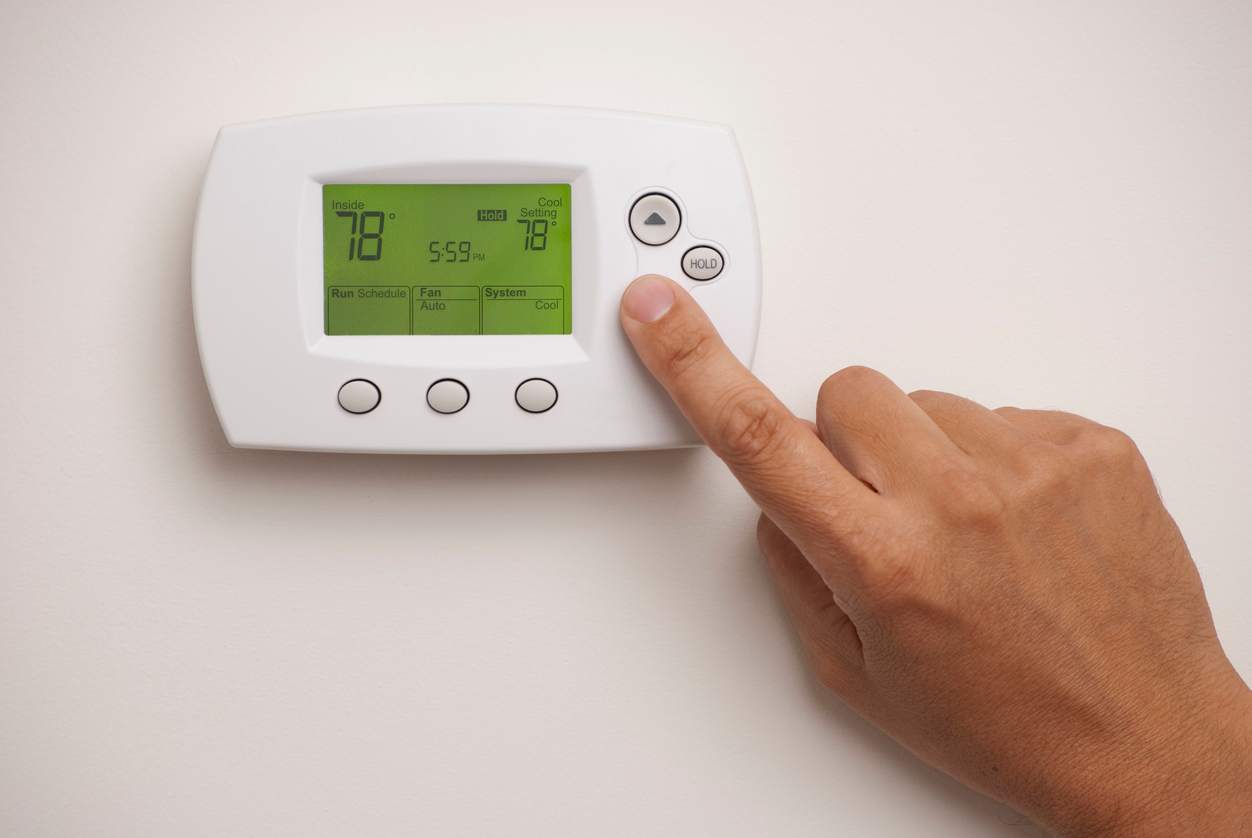
The U.S. Department of Energy strictly recommends setting your thermostat to 78°F (26°C) when you are home and awake. For every single degree you raise your thermostat above 72°F, you can save up to 3% to 8% on your total cooling costs. If 78°F feels too warm initially, do not immediately drop it to 70°F. Nudge it down to 76°F, wait an hour, and let your body acclimate naturally to the environment.
The “Away” Rule:
If you leave the house for work, do not turn the AC completely off. Instead, raise the temperature to 82°F or 85°F. This prevents the room from turning into an absolute oven, meaning the AC will not have to work for three straight hours at maximum capacity to cool the walls and furniture back down when you return.
3. Manipulate the “Perceived” Temperature
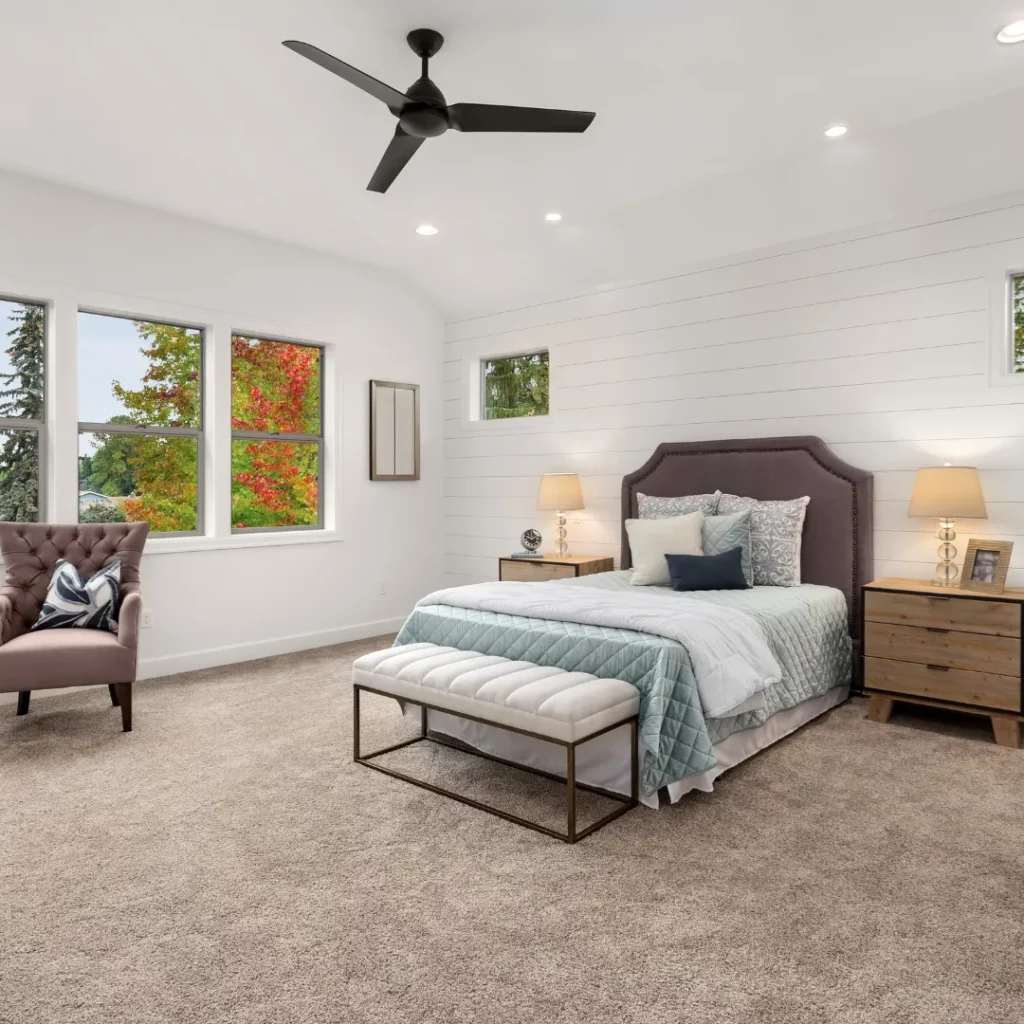
Air conditioners cool the physical air; fans cool the people. A ceiling fan or a cheap oscillating pedestal fan creates a “wind chill” effect by actively evaporating moisture from your skin. When you use a fan in direct conjunction with your AC, a room that is technically 78°F will physically feel like it is 74°F to your body.
Stop Cooling the Neighborhood
If you are using a window AC unit in a small room, the accordion-style plastic side panels are notorious for leaking expensive cold air out and letting hot summer air in.
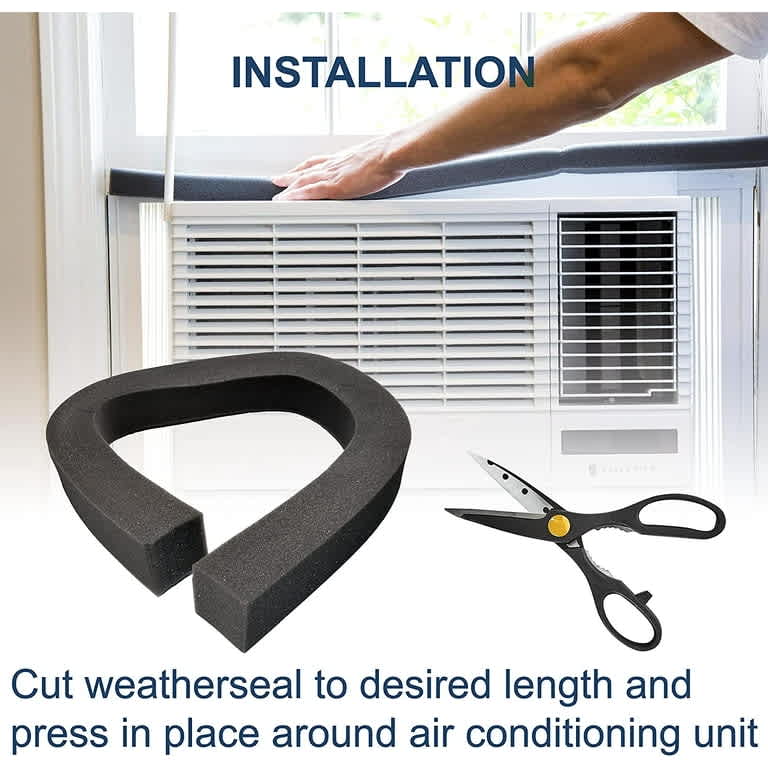
Go to any local hardware store and buy a $5 roll of foam weatherstripping. Pack it tightly around the edges of the window unit to create a perfect thermal seal. Furthermore, if you are only trying to cool your bedroom at night, keep the bedroom door firmly shut to create a small, easily managed “cooling zone.”
4. The 60-Second Maintenance Task
The most common reason air conditioners fail to cool a room efficiently is a clogged, filthy air filter. The AC relies entirely on pulling warm room air through the front grate, passing it over cold evaporator coils, and blowing it back out into the room. If the filter behind that grate is choked with a thick layer of grey dust, dead skin, and pet hair, the fan motor has to work twice as hard to pull half as much air.
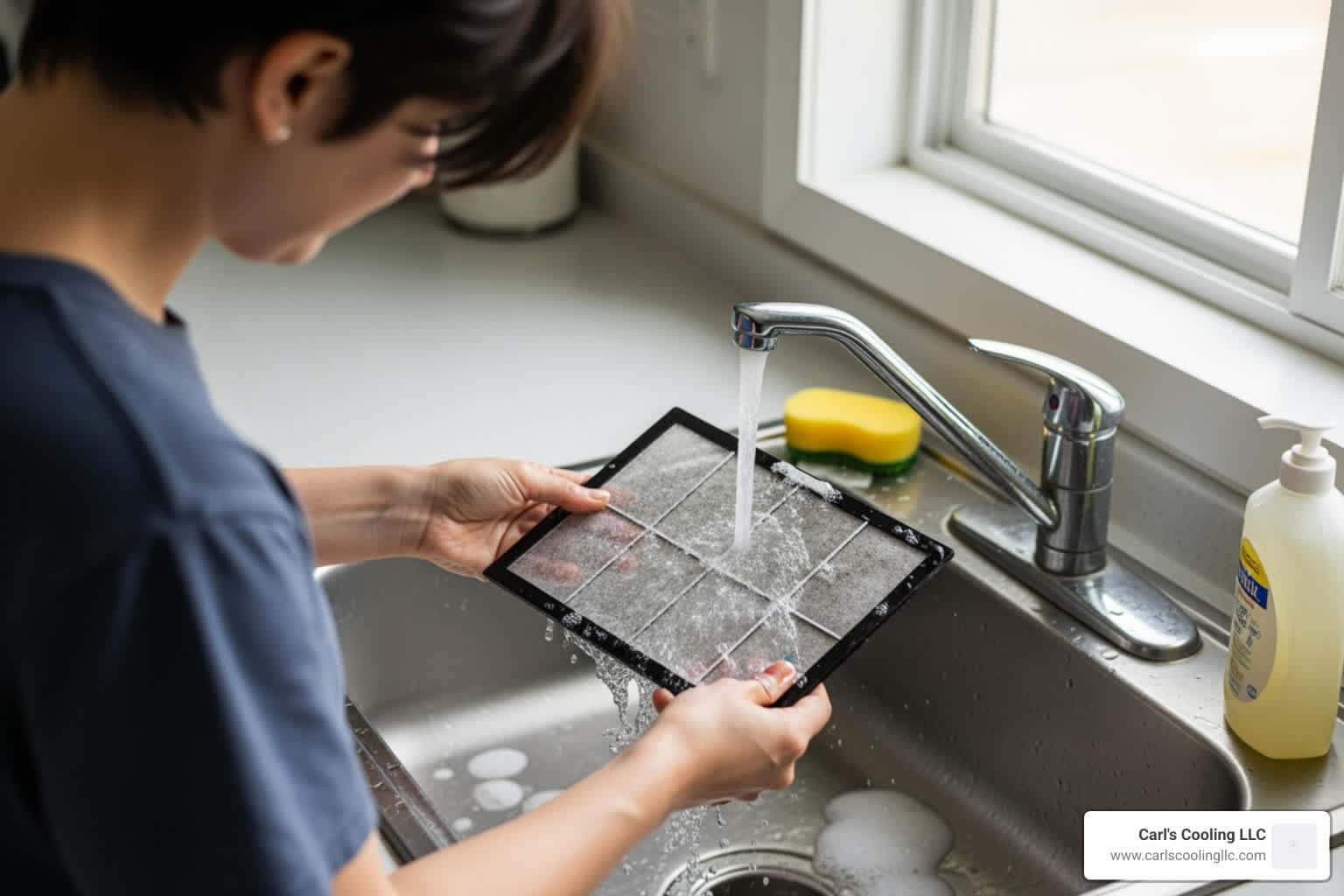
Every 30 days during the peak of summer, slide the plastic mesh filter out of the front of your window or portable AC unit. Rinse it thoroughly in the kitchen sink with warm water, let it air dry completely, and slide it back in. This takes less than a minute of your time and instantly restores your unit’s factory airflow efficiency.
What Real Renters & Homeowners Say
We pulled these unedited comments from home-efficiency forums to see what tactics actually work in the real world:
“Advice for anyone trying to get their AC bill down… You don’t need it blasting at 68F. Set your thermostat to 76-78 and use ceiling fans. Seal any obvious drafts around windows/doors. A $5 roll of weather stripping goes a long way.
— Home Efficiency Forum User
Biggest difference for me was getting a smart plug and putting the window unit on a schedule. It doesn’t need to run all night at full blast. A couple hours to cool the room before bed and then cycling with a fan is enough.”
— Home Efficiency Forum User
Frequently Asked Questions
Is it cheaper to leave the AC on all day while I’m at work?
No. It is a persistent myth that it takes more energy to cool a hot room down than it does to maintain a cold room all day. However, you should not turn it completely off if it is 100°F outside. Raise the thermostat to 82°F or 85°F while you are gone so the unit only kicks on to prevent extreme heat buildup in the drywall and furniture.
Is using “Fan Mode” on my AC better than turning it off?
Fan mode uses significantly less electricity than running the compressor (the heavy mechanical part that actually makes the air cold). However, fan mode does not remove heat or humidity from the room; it just moves the existing air around. It is best used in the evenings when the outside air has naturally cooled down.
How can I lower my bill without buying a new AC unit?
Close your blinds and curtains during the hottest part of the day to physically block solar heat. Seal the accordion gaps on your window unit with foam tape. Finally, buy a cheap box fan and aim it at your bed or desk; the breeze will allow you to raise the AC temperature by 3 or 4 degrees without feeling any warmer.