Preparing for colder weather takes more than checking whether your windows feel drafty. By building a set of proactive smart home energy habits, you can completely change how your house performs during winter. The goal is simple: stay warm, reduce waste, and prevent your utility bill from surprising you in January.
The encouraging part is that you do not need a full renovation or an expensive smart-home overhaul to make a real difference. Small, consistent adjustments to your daily routine often create the biggest long-term payoff. When you combine a few low-friction habits with the right automation, your home becomes more efficient without feeling less comfortable.
In this guide, we break down the most practical winter energy habits for families, from thermostat scheduling and lighting control to phantom-load reduction and weather-aware routines. Start these habits before the first cold snap, and your home will be far easier and cheaper to run all season long.
Why Winter Preparation Matters

As temperatures fall, your home begins using more electricity and fuel in ways that are easy to miss. Your furnace or heat pump runs longer, lights stay on earlier in the evening, and families naturally spend more time indoors using electronics, laundry machines, and kitchen appliances. That combination creates the seasonal spike many households feel between late fall and mid-winter.
The financial impact of inefficient heating adds up fast. A thermostat set a little too high, curtains left open after dark, clogged HVAC filters, and electronics left in standby mode may seem minor on their own. Together, they quietly push your costs higher every day.
The core idea
Winter efficiency is not about one magic product. It is about tightening the small leaks in your routine: heating only the spaces you need, automating repetitive actions, and catching waste before it becomes a habit.
That is why proactive maintenance matters so much. When you service your HVAC system early, replace dirty filters, and set up automated routines before the weather turns, you reduce the odds of both high bills and emergency repairs during the coldest weeks of the year.
Start With a Family Energy Audit

Before you automate anything, take one evening to do a simple room-by-room energy audit with your family. Walk through the house and look for obvious heat loss, power waste, and behavior patterns that repeat every day. Check for drafty windows, exterior doors with light showing underneath, electronics that stay on overnight, and rooms that are heated even when nobody uses them.
This exercise works best when everyone has a role. One person can check vents and filters, another can note unused devices that stay plugged in, and kids can spot lights left on in low-traffic rooms. Turning the audit into a shared routine helps energy saving feel like a team project instead of one more thing one adult has to manage alone.
Set realistic temperature goals
The best winter temperature is the one your family can actually stick with. Rather than aiming for a drastic cut that everyone will fight, choose a comfortable baseline and then lower it slightly during sleep hours or when the house is empty. Even modest adjustments are worthwhile when they happen every single day.
Use Smart Thermostats the Right Way

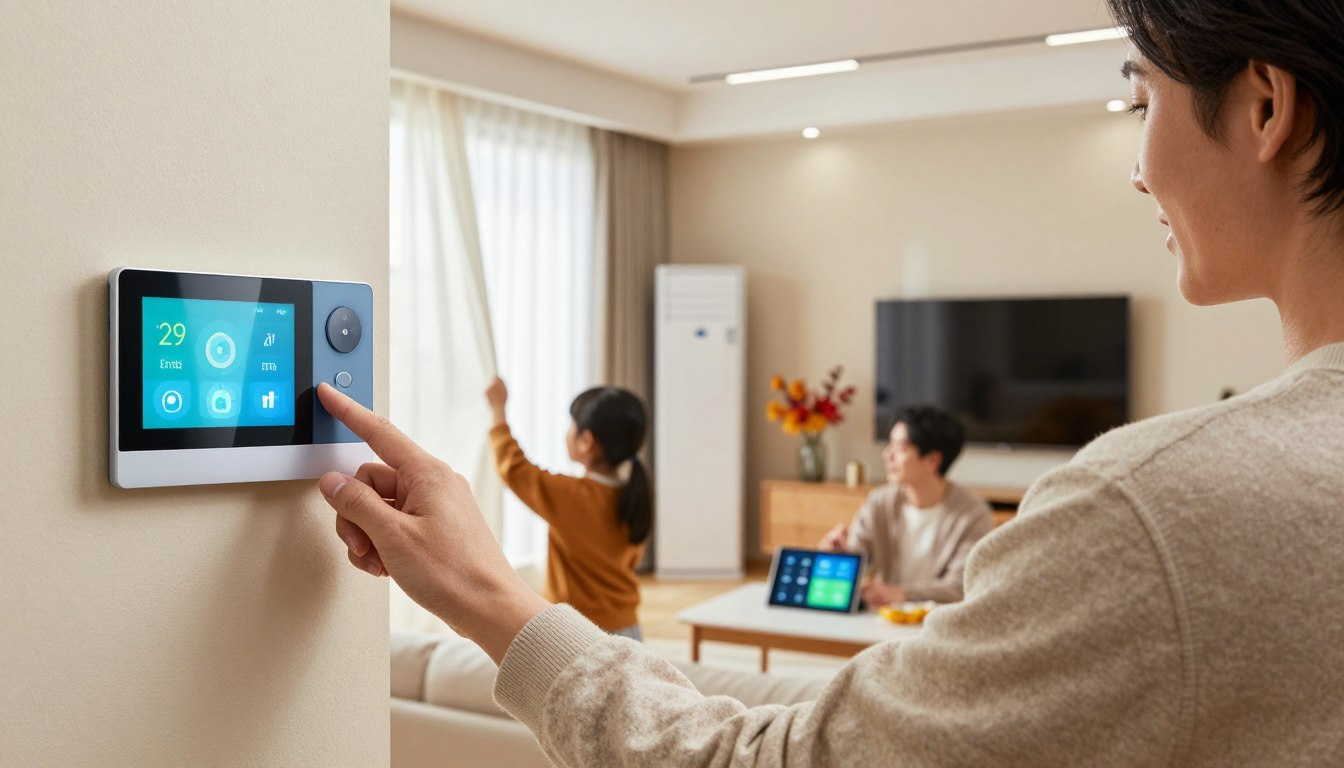
A smart thermostat is one of the most useful winter upgrades because it turns a good intention into an automatic habit. Instead of remembering to turn the heat down every night or every time the house empties out, you create a schedule once and let the system handle it. That removes one of the biggest causes of wasted energy: forgetfulness.
Look for a thermostat that works with your current heating system and offers remote access, scheduling, and geofencing. Geofencing uses your phone’s location to detect when the house is empty, while adaptive scheduling gradually learns how long your home takes to warm up. These features are especially useful for busy families whose schedules vary between weekdays, weekends, and school breaks.
Practical habits to build
- Use one weekday schedule and one weekend schedule instead of trying to fine-tune every day.
- Set a lower overnight temperature rather than heating sleeping areas like daytime living rooms.
- Review your settings before holidays, school breaks, and travel days.
- Check your energy reports monthly to see whether your routines are actually reducing run time.
Make Winter Lighting Smarter

Winter lighting costs creep up because sunset comes earlier and families naturally rely more on lamps, kitchen lights, hallway lights, and outdoor fixtures. The easiest upgrade is moving to LED smart bulbs in the rooms you use most. They use far less electricity than older bulbs and give you more control over brightness and timing.
Motion sensors are especially useful in spaces where lights get left on by accident. Hallways, laundry rooms, mudrooms, guest bathrooms, and basements are perfect examples. These are practical spaces, not comfort spaces, so automation works well because it eliminates waste without changing how the room feels.
Use scenes instead of full-room lighting
Create evening lighting scenes that rely on a few lamps instead of every overhead fixture. For example, a “Winter Evening” scene could dim ceiling lights, switch on one floor lamp near the sofa, and keep a kitchen task light active until bedtime. That gives you a warmer atmosphere and uses less electricity than flooding the entire house with bright overhead lighting.
Cut Phantom Loads With Smart Plugs
One of the easiest winter habits to automate is reducing phantom loads. Many electronics draw power all day, even when nobody is using them. Gaming consoles, streaming devices, desktop computers, printers, coffee makers, and entertainment centers are common offenders. Because they sit quietly in standby mode, they are easy to forget and expensive to ignore.
Smart plugs and smart power strips solve this by shutting off power based on a schedule or a trigger. You can set your entertainment center to power down overnight, cut power to a desktop setup during school hours, or stop kitchen devices from sitting in standby for 20 hours a day. These are simple changes, but they remove a layer of constant background waste.
Where to use them first
- TV + soundbar + game console clusters.
- Home office desks with printers, speakers, and monitors.
- Coffee stations and countertop appliances with digital clocks.
- Guest-room electronics that sit idle most of the week.
Use Smart Sensors to Keep Heat Inside
Smart thermostats help you control heat, but weatherizing habits help you keep that heat. Door and window sensors can tell you when an entry is left open, but they are also useful for spotting patterns. If one room always feels colder and the same window or patio door keeps triggering, that often points to an insulation or sealing issue you should address before winter gets worse.
Humidity sensors are also surprisingly helpful in cold weather. Air that is too dry can make a house feel colder than it actually is, which pushes people to raise the thermostat unnecessarily. Monitoring humidity gives you a better shot at balancing comfort without overheating the whole house.
Do not overlook your windows
Smart blinds or simple timed routines can help capture free solar warmth during the day and hold it in after sunset. Open curtains on sun-facing windows during bright winter afternoons, then close them at night to add an extra barrier between the glass and your living space. This is a low-tech habit with a high return.
Turn Smart Tools Into Family Habits
Technology works best when it supports daily behavior instead of trying to replace it. A smart thermostat cannot help much if someone keeps opening windows while the heat is running. Motion lights help, but they work even better when your family still has the habit of checking switches. The strongest winter strategy combines automation with a few simple manual routines that everyone understands.
“The most sustainable energy habit is the one your family can repeat without thinking about it.”
Simple routines worth starting now
- Close curtains at dusk every day, not only on the coldest nights.
- Replace HVAC filters on a set calendar reminder instead of waiting until airflow feels weak.
- Use blankets and layers in the evening so you do not raise the thermostat for a short comfort boost.
- Run laundry and dishwashers as full loads to reduce both electricity and hot-water demand.
- Review one utility bill together each month so the whole household can see progress.
FAQ
How early should families start winter energy prep?
Ideally, start in early fall. That gives you time to test your heating system, replace filters, seal leaks, and build routines before cold weather turns every small problem into a bigger expense.
Do smart thermostats really help if my schedule changes a lot?
Yes. They are especially useful for unpredictable schedules because remote access, geofencing, and adaptive learning help your heating system respond to real behavior instead of a fixed timetable.
What is the fastest low-cost upgrade for winter savings?
For most homes, it is a combination of thermostat scheduling, HVAC filter replacement, and smart plugs for entertainment or office setups. Those three changes are affordable, easy to implement, and usually show results quickly.
How do I get kids involved without turning it into a chore?
Give them one visible responsibility, such as checking lights, closing curtains at dusk, or helping track the monthly bill. The simpler the role, the more likely it becomes a real family habit.