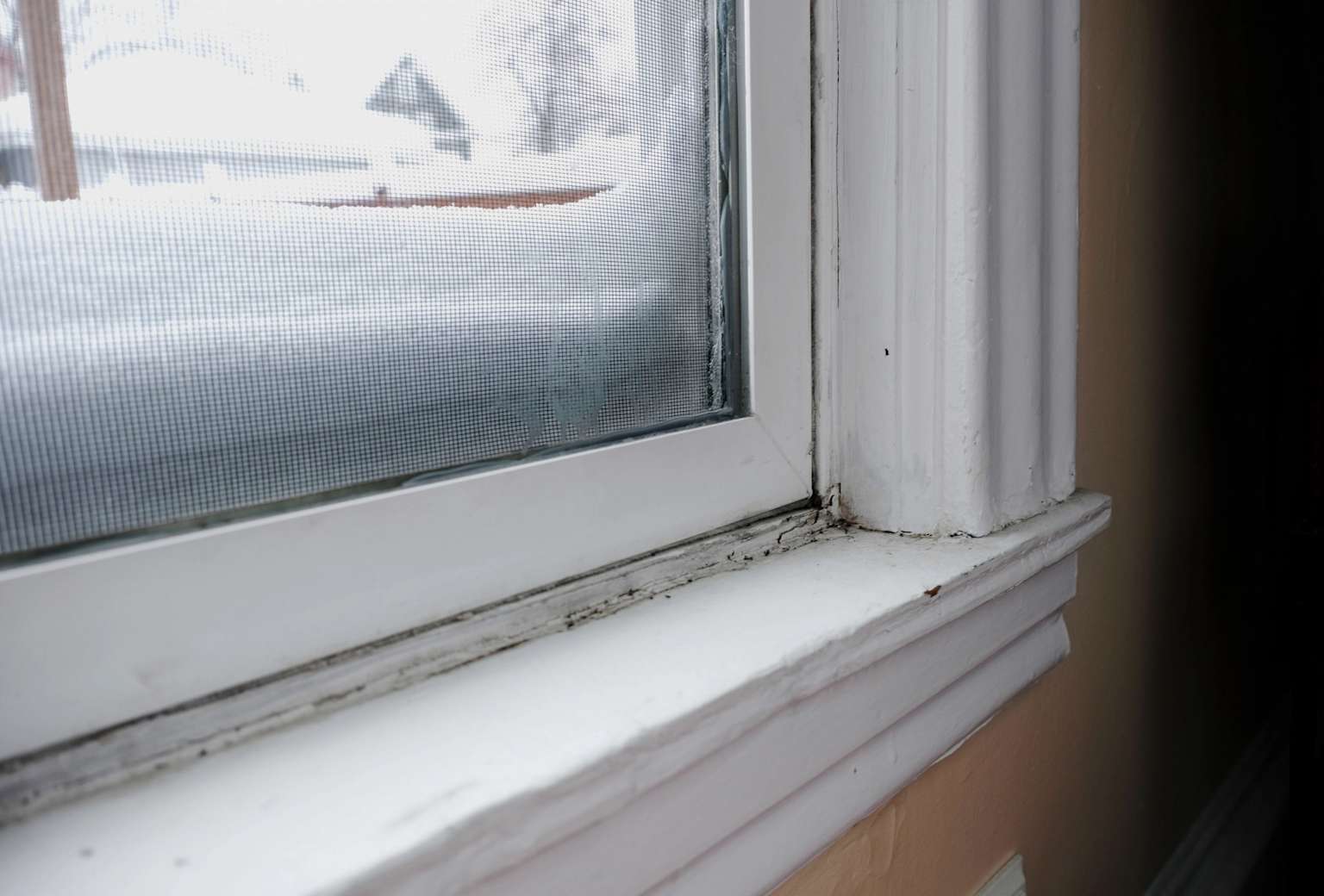
Drafty windows can make a room feel significantly colder than what your thermostat reads. For homeowners, the solution is often replacing the windows or undertaking heavy-duty caulking projects. But as a renter, your options are limited—you cannot permanently alter the frames, and you definitely want your security deposit back when you move out.

Shrink-to-fit window insulation film is the ultimate renter-safe hack. It is a temporary, low-cost way to completely block winter drafts by sealing the window area and trapping a thick layer of dead, insulating air between the film and the glass. When installed correctly over the interior trim, it acts like a makeshift double-pane window that completely stops convective airflow.
Before You Buy: Do You Actually Have Drafts?
Window film works miracles for physical airflow, but it is less effective if your problem is simply “cold glass.” Before you buy a kit, the ENERGY STAR program recommends doing a quick diagnostic check to find the exact source of your heat loss:
- The Paper Test: Close the window on a piece of printer paper. If you can slide the paper out easily without tearing it, the weatherstripping seal is broken and cold air is leaking in.
- The Incense Test: Light an incense stick (or a smoking match) and hold it near the edges of the window frame on a windy day. If the smoke blows horizontally into the room, you have a physical draft.
Note: If the smoke goes straight up, but the area just feels chilly, you are experiencing radiant heat loss. Heavy thermal curtains might be a better investment for your specific situation.
The Landlord-Friendly Communication
It is always best to keep your landlord in the loop, especially if they are strict about wall modifications. Feel free to copy and paste this message so they know you are improving their property without damaging it:
“Hi [Landlord Name], I’m planning to install a temporary shrink window insulation film kit on the inside trim to help reduce winter drafts and save on heating. It uses specially designed removable tape on the interior woodwork and will be cleanly removed at the end of the season without damaging the paint. Let me know if you have any questions!”
What You Will Need for the Project
- A standard plastic window insulation kit (includes shrink film and double-sided tape)
- Rubbing alcohol and cotton balls or a clean microfiber cloth
- A standard household hair dryer
- Scissors and a sharp utility knife or box cutter
- A tape measure
Step-by-Step Installation (The No-Damage Focus)
Follow these steps carefully to ensure the tape holds tightly against winter storms but releases cleanly from the paint in the spring.
Step 1: Prep the Trim (The Make-or-Break Step)
Tape will not stick to dusty, greasy, or freezing cold wood. Wipe the entire perimeter of the interior window frame with rubbing alcohol. Let it dry completely. Professional installers note that thoroughly cleaning the frame is the single most important step to prevent the film from peeling down mid-winter.
Step 2: Apply the Tape
Run the double-sided tape in a continuous, unbroken square around the front face of the window trim. Press firmly along the entire line with your thumb to activate the adhesive. Crucial tip: Leave the paper backing on the tape for now so you don’t accidentally stick the film in the wrong spot.
Step 3: Cut and Attach the Film
Measure your window and cut the plastic film, leaving at least 2 extra inches of overlap on all sides. Peel the paper backing off the top piece of tape first. Press the top edge of the film into the tape. Slowly work your way down the sides, and finally the bottom. Pull it gently taut as you go, but do not worry about the wrinkles yet.
Step 4: Shrink and Trim
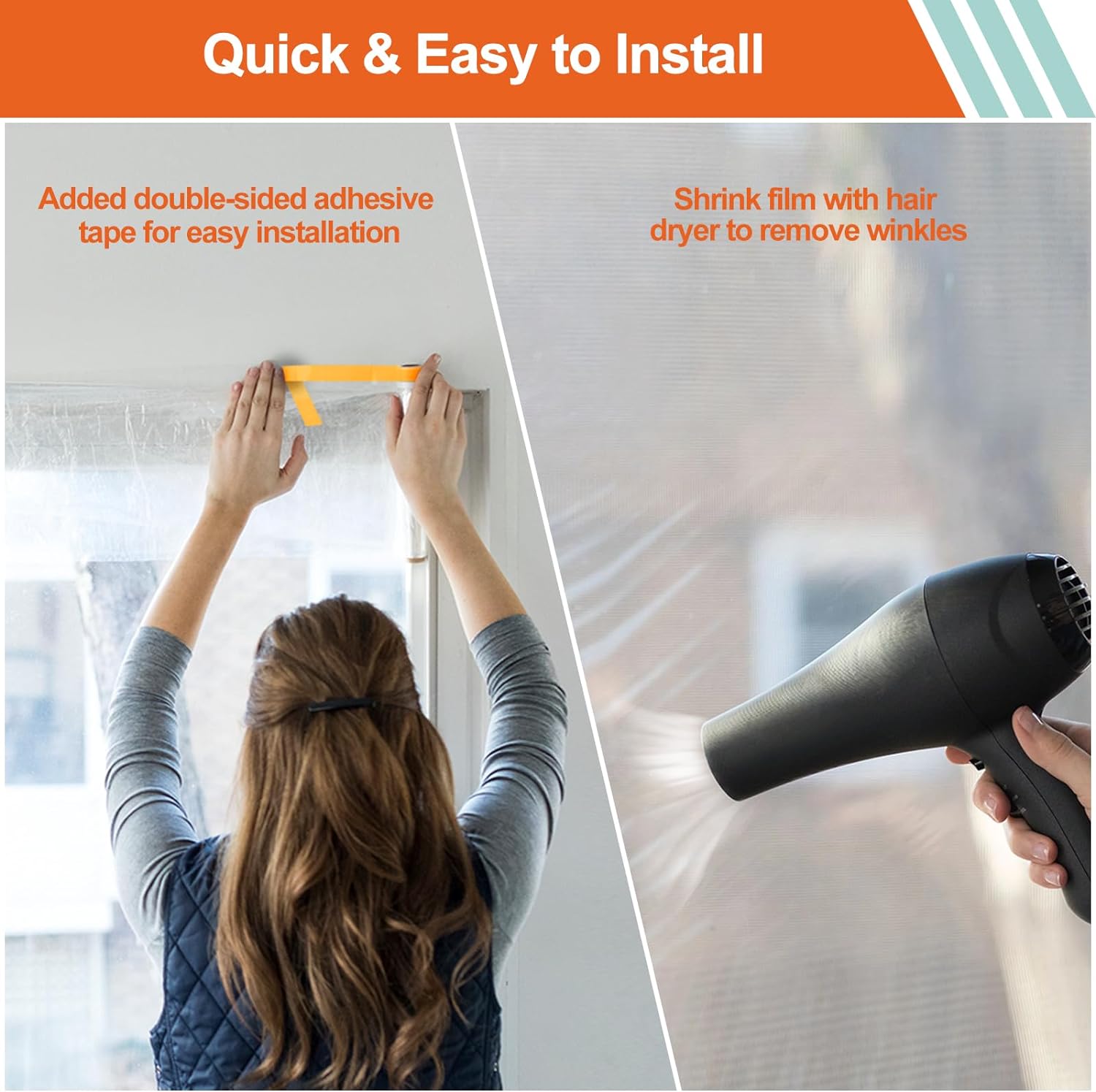
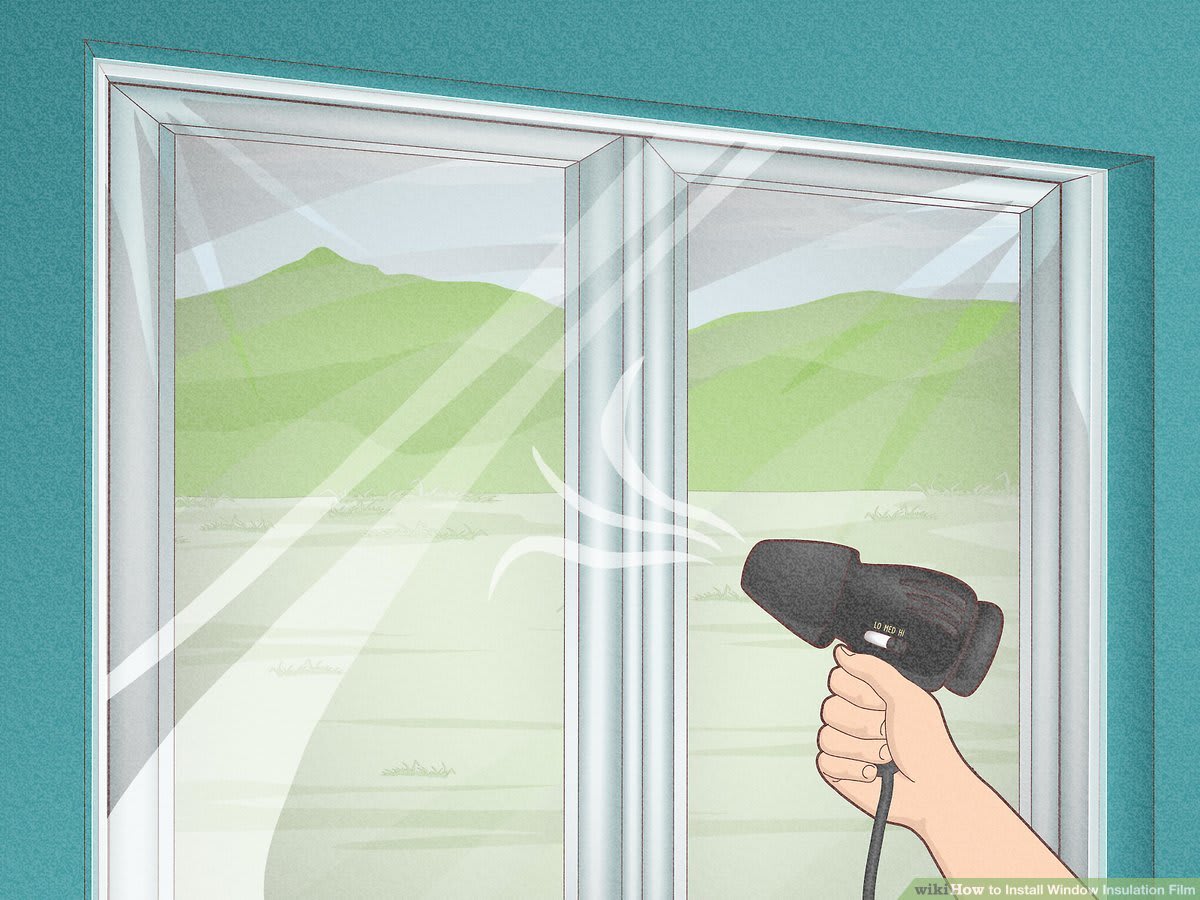
Turn your hair dryer on high heat. Hold it about 4 to 6 inches away from the film, starting at a top corner and slowly sweeping back and forth. You will see the wrinkles magically pull tight until the film looks like a clear pane of glass. Keep the dryer moving to avoid melting a hole in the plastic. Once tight, use your utility knife to carefully score and trim the excess plastic hanging past the tape.
Crucial Renter & Safety Warnings
- Emergency Egress: Never seal a window that is required as a primary fire escape route (such as the only window in a bedroom). You cannot easily break through the thick, stretched plastic film in a panic.
- Ventilation: Do not seal every single window in your apartment, especially in bathrooms and kitchens. You still need a way to vent cooking moisture and steam to prevent dangerous mold buildup.
- Fragile Paint: If your apartment has peeling, 20-year-old paint on the trim, test a small strip of tape in an inconspicuous corner for 24 hours before doing the whole window.
How to Handle Mini-Blinds Inside the Frame
If your landlord’s mini-blinds are mounted deep inside the window frame, you can still use the film while keeping the blinds usable. Here is a simple, proven hack:
- Remove the twist-wand before shrinking the film.
- Install and shrink the film as normal over the blinds.
- Put a small square of clear, heavy-duty packing tape over the exact spot where the wand attaches (this reinforces the thin film).
- Cut a tiny, clean slit through the packing tape and slip the wand back onto its hook. You can now twist the blinds open and closed without tearing the insulation.
Damage-Free Removal in the Spring
When the weather warms up, it is time to take the film down. Do not just rip it off the wall like a band-aid, as this is exactly how cheap apartment paint gets peeled. The kit tape is designed to remove easily, but technique matters.
First, peel the plastic film away from the tape. Then, use your hair dryer on a low heat setting to gently warm the double-sided tape still stuck to the trim. This softens the adhesive. Slowly pull the tape back flat against itself at a low angle, rather than pulling straight out toward you. If any sticky residue is left behind, a dab of rubbing alcohol will wipe it away effortlessly.
Frequently Asked Questions
Does window insulation film actually help in drafty apartments?
Yes, significantly. It stops the physical exchange of cold outdoor air and warm indoor air. The trapped pocket of dead air between the film and the glass acts as a highly effective insulation barrier, keeping the room warmer and cutting down on heating costs.
Is this the same as UV or privacy tint film?
No. Shrink kits are specifically for winter draft reduction and are attached to the wooden frame/trim, hovering over the glass. UV/tint films are sticky decals applied directly against the glass itself for summer sun control or privacy.
Can I reuse the plastic film next year?
Generally, no. Because the film shrinks permanently to the exact dimensions of the window under the heat of the hair dryer, it cannot be effectively stretched or reused a second time. However, a single kit covering 3-5 windows usually costs less than $15, making it a very affordable annual investment.