Sustainable Living
For most of us, living the “dream life” does not include staring at a shockingly high utility bill every month. Yet, according to recent financial surveys, the majority of adults say rising energy costs are now one of the top pressures on their household budget.
The tricky part about energy waste is that it rarely looks dramatic. It is the small things: a thermostat left two degrees too high, a laptop charging all night when it is already at 100%, or a half-empty dishwasher run on the heavy cycle. One isolated habit does not seem like much, but compounded over days, weeks, and months, these actions quietly drain your bank account.
The good news is that you do not have to turn into a hardcore minimalist or live in the dark to see a real financial difference. By making tiny, strategic tweaks to your daily routine, you can shave real money off your bills while cutting your carbon footprint.
1. The Morning Routine: Showers & Coffee
The first 45 minutes of your day are highly energy-intensive. Your water heater and your kitchen appliances are the primary culprits.
The Water Heater Secret
Heating water accounts for roughly 18% of a home’s energy use. Most manufacturers set water heaters to 140°F (60°C) by default. Lowering the dial to 120°F (49°C) is still plenty hot for a luxurious shower, but it can save you up to $60 a year in standby heat loss alone.[1]
When making breakfast, choose your appliances wisely. Boiling water for tea in a microwave or an electric kettle uses about 50% less energy than boiling it on a traditional electric stovetop. If you are making toast or heating a pastry, use a toaster oven rather than preheating your massive conventional oven.
2. The Workday: Killing Vampire Power
If you work from home, your digital footprint is likely inflating your bill. But even if you leave for an office, your house is still consuming electricity. This is known as “Vampire Power” or standby power.
Devices like televisions, gaming consoles, cable boxes, and smart speakers constantly draw power simply waiting for a remote control signal or voice command. This idle power drain can account for up to 10% of your total residential electricity use.[2]
The Habit Fix: Group your electronics onto smart power strips. When you finish working at your desk, flip one switch on the power strip to completely kill the power to your monitors, printer, and chargers. Do the same for your living room entertainment center before leaving the house.
3. The Evening Routine: Laundry & Dishwashing
Evening is peak time for the heavy-hitter appliances: the washer, dryer, and dishwasher.
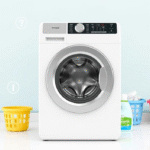
- Cold Water Washing: Roughly 90% of the energy used by a washing machine goes purely toward heating the water. Modern liquid detergents are formulated with enzymes that activate specifically in cold water. Switching from hot to cold washes gets your clothes just as clean and drastically cuts the energy cost per load.
- The Dishwasher Myth: Many people believe hand-washing dishes saves hot water. It doesn’t. Modern ENERGY STAR dishwashers are incredibly efficient, using less than 4 gallons of water per cycle. Hand washing the same amount of dishes with the tap running can use up to 20 gallons of hot water. Just make sure the dishwasher is completely full before you press start.
Real Results from the Community
Here is how real homeowners are putting these habits into practice:
“Smart thermostat programmed with larger temperature swings when we’re out during the day, air-drying clothes, and sealing obvious drafts made the biggest difference for us. Our winter bill dropped by 20% compared to last year.”
“Honestly the biggest surprise was how much we saved just by washing everything on cold and line-drying half our loads. Clothes last longer too.”
Frequently Asked Questions
What uses the most electricity in a typical home?
In the vast majority of homes, the “Big Three” are heating and cooling (often accounting for 40% to 50% of total use), water heating, and large appliances like refrigerators and dryers. Focusing your energy-saving habits on these three areas will yield the fastest financial return.
Do small changes really make any difference to my bill?
Yes, because energy savings compound. One change by itself might only save $4 a month. But if you combine cold-water laundry, a 2-degree thermostat adjustment, killing vampire power, and swapping to LED bulbs, those small habits compound into hundreds of dollars saved annually.
When should I think about bigger upgrades?
Once you have nailed the free behavioral habits, look at major upgrades if: your HVAC system is over 15 years old, your home feels drafty and lacks attic insulation, or your refrigerator is decades old. You can often get a free energy audit from your local utility company to see which upgrade will pay for itself the fastest.