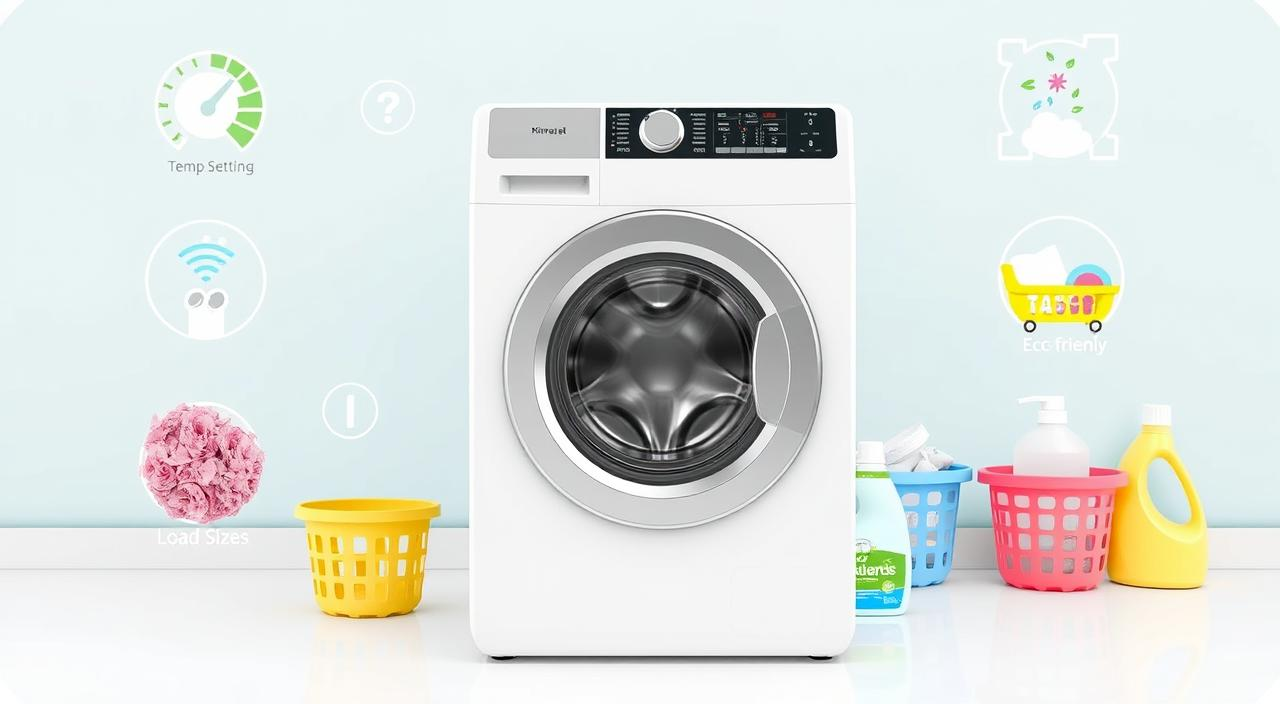
1. Where the energy actually goes
Most people assume the expensive part of washing clothes is turning the heavy drum. In reality, the biggest cost in many cycles comes from heating the water. That is why temperature choice has such an outsized effect on electricity use.
If you want one habit that gives you the fastest return, make cold water your default. For ordinary T-shirts, jeans, gym wear, pajamas, and mixed everyday laundry, cold water is usually the smartest balance of cleanliness, fabric care, and low energy use.
| Wash temperature | Best for | Energy impact |
|---|---|---|
| Cold | Most everyday laundry, colours, lightly to moderately soiled clothes | Lowest |
| Warm | Heavier soil, greasy items, loads that need a bit more help | Moderate |
| Hot | Specific sanitation-focused or heavily soiled loads | Highest |
The key is not banning warm or hot cycles forever. It is treating them as special-purpose settings instead of the default button you press out of habit.
2. Why the right detergent changes everything
A lot of people still believe cold water means weaker cleaning. That was more true years ago, when some detergents struggled to dissolve well at lower temperatures. Modern laundry detergents are much better, especially liquid formulas, HE detergents, and products specifically labeled for cold-water performance.
If your goal is lower energy use, detergent choice matters because it lets you stay on colder cycles without sacrificing results. Instead of relying on heat to do extra work, you are relying on a formula designed to clean effectively in cooler water.
Better detergent habits
- Pick a detergent labeled for cold water if you mostly wash on cold.
- Use HE detergent if your machine is a high-efficiency model.
- Measure carefully; too much detergent can leave residue and trigger extra rinsing or rewashing.
- Pre-treat visible stains instead of rewashing an entire load later.
This is also where a lot of people accidentally waste money. Using more detergent than the label recommends does not automatically mean cleaner clothes, but it can mean extra buildup, longer rinse behavior, and more wear on fabrics.
3. Loads: full is efficient, overloaded is not
Running small loads is one of the easiest ways to make laundry more expensive than it needs to be. Even efficient washers still spend water, electricity, and time on every cycle, so washing a few scattered items usually gives you poor value.
That said, “full load” does not mean stuffing the drum until nothing can move. Clothes still need room to tumble, soak, and rinse properly. The most efficient load is a sensible full load, not a compressed block of fabric.
| Load type | What it looks like | Efficiency |
|---|---|---|
| Too small | A partly filled drum with lots of empty space | Poor |
| Sensible full load | Drum is well filled, but clothes can still move freely | Best |
| Overloaded | Laundry packed tightly against the top of the drum | Looks efficient, but often is not |
A simple rule of thumb: load the washer until it feels worth running, then stop while the clothes still have room to circulate. That improves washing performance and lowers the odds of needing a second cycle.
4. Use the right cycle, then help the dryer work less
Quick wash and eco modes can be excellent money-savers, but only when they match the laundry. Quick cycles are best for lightly worn clothes, not muddy sports gear or stained kitchen towels. Eco settings are often slower, but they are designed to reduce energy and water use by optimizing the overall cycle.
The other overlooked saving move is spin speed. A faster spin cycle uses far less energy than a dryer needs to evaporate the same water later, so using the highest safe RPM for towels, jeans, bedding, and sturdy fabrics can cut drying time noticeably.
High-impact washer habits
- Use quick wash for lightly soiled clothes only.
- Try eco mode for regular loads when you do not need the cycle finished fast.
- Use a higher spin speed on sturdy fabrics to remove more water.
- Air-dry some loads, or part of a load, whenever possible.
- Check whether your utility uses time-of-use pricing before shifting laundry to late night hours.
If your electricity plan has peak and off-peak rates, doing laundry at a cheaper time can reduce the cost per load even when total energy use stays the same. That is a billing win, not necessarily an efficiency win, but it still helps the monthly total.
Community results: does this actually work?
“We switched to doing almost everything on cold unless it’s towels, sheets, or truly gross stuff. Between that and only running full loads, my power bill dropped more than I expected.”
— Homeowner Forum User
“Line drying was the sleeper hit for us. I still use the dryer for some things, but hanging shirts and jeans cut a noticeable chunk off the bill.”
— Homeowner Forum User
Frequently Asked Questions
Is it cheaper to do laundry at night?
Sometimes. It depends on whether your electricity plan uses time-of-use pricing. If it does, off-peak washing can lower the cost of the load even if the machine uses the same amount of energy.
Are quick wash cycles better for saving energy?
Usually yes, for lightly soiled laundry. They can save time, water, and electricity, but they are the wrong choice for heavily stained or very dirty loads that would just need rewashing.
Do I need special detergent for cold water?
Not always, but it helps to use a detergent that is clearly designed to dissolve and clean well in cold or low-temperature cycles. That makes it easier to keep your machine on energy-saving settings without sacrificing results.
What is the single best habit to start with?
Switch most loads to cold water first. It costs nothing, takes no extra effort, and usually delivers the clearest immediate reduction in washer energy use.
References & Sources
- Uswitch. Energy-efficient laundry tips.
Read source - Michigan Saves. Five Essential Tips for Elevating Your Washing Machine’s Efficiency.
Read source - Zanussi Egypt. 8 energy saving tips for washing machine.
Read source - Electrolux Arabia. 9 energy saving tips for washing machines.
Read source