Apartment Living
|
Read time: ~7 minutes
That is exactly where solar lights come in as the ultimate renter-safe upgrade. They require no electrical expertise, cost nothing to run, and move with you when your lease is up. However, getting solar to work efficiently on a shaded, north-facing apartment balcony requires a bit of strategic planning.
In this guide, we break down exactly how to bypass balcony shade, the safest ways to mount lights without drilling, and the technical specs you must check before buying.
1. Beating the “Shaded Balcony” Problem
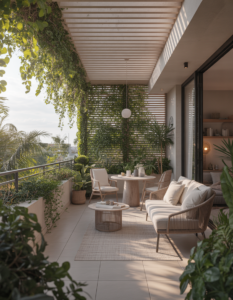
Many renters buy expensive solar lights, place them in a shady corner, and assume the product is defective when it dims after an hour. The photovoltaic (PV) output loss from even partial shading can be massive. If just a small shadow from a railing spindle crosses your panel, it can severely drop battery charging.[1]
The Fix: Use a Detachable Panel. If your balcony sits under a deep roof overhang, do not buy “all-in-one” solar lights where the panel is permanently attached to the bulb. Instead, buy lights that feature a separate solar panel attached via a long cable (usually 10 to 15 feet long). This allows you to clamp the solar panel on the far outer edge of your railing to catch the sun, while stringing the actual lights deep into the shaded corners of your seating area.
2. Solar Light Styles That Actually Work for Renters
Not all solar lights are created equal, and some simply look out of place on a small apartment terrace. Here is what works best:
-
Solar String Lights (Best for Vibe)
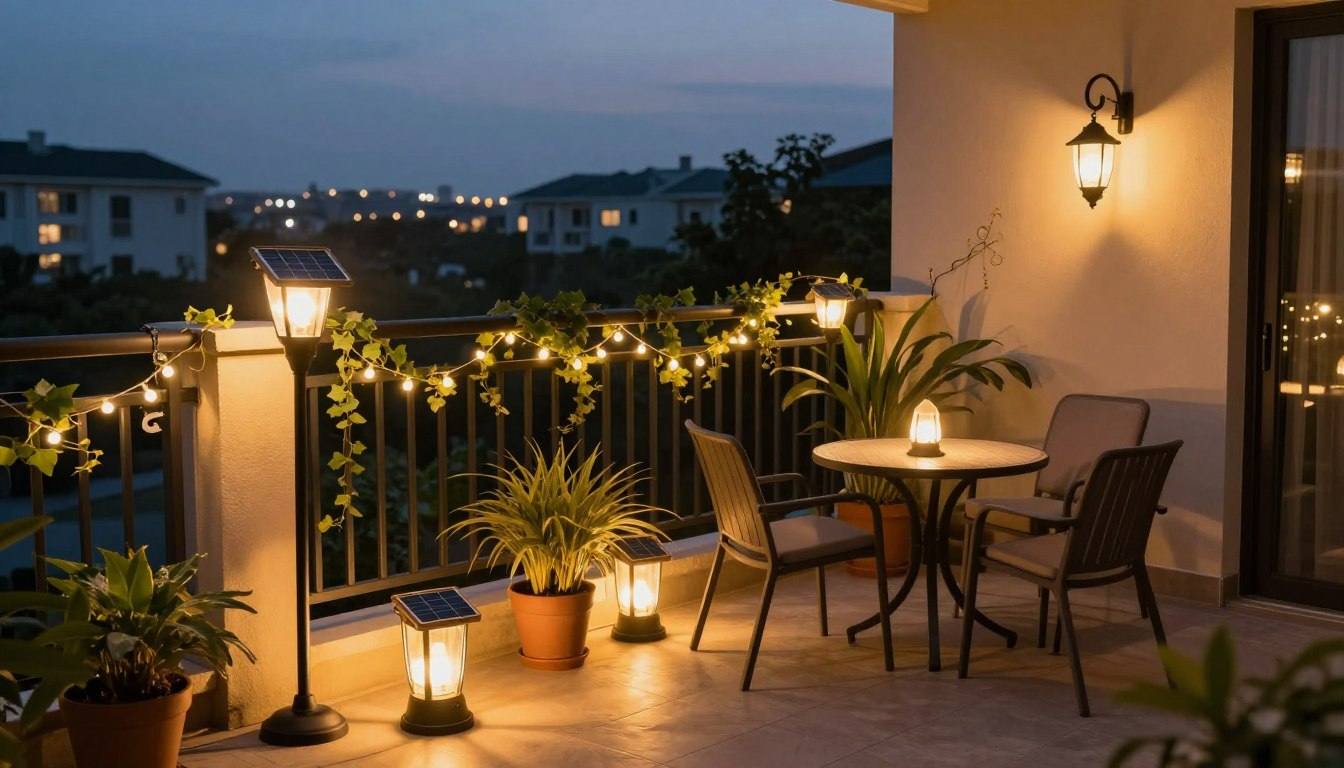
String lights instantly transform a sterile concrete balcony into an outdoor living room. Always opt for “warm white” bulbs (around 2700K to 3000K) rather than cool white, which can feel harsh and attract more insects. If your balcony gets limited sun, buy shorter string lengths; fewer bulbs mean less battery drain.
-
Solar Lanterns (Zero Installation)
Lanterns offer excellent flexibility because they require absolutely no mounting. Look for models with a heavy, stable base so they do not blow over during a storm. They are perfect as a centerpiece on an outdoor bistro table.
-
Solar Spotlights (Best for Plants)
If you have a vertical garden, spotlights make your foliage pop at night. Look for models that offer clamp or zip-tie mounting bases rather than just in-ground lawn stakes.
3. No-Drill Mounting Solutions
Landlords are notoriously strict about exterior modifications. Use these rail-first mounting strategies to hold up against strong winds while removing without a trace.
4. Technical Specs That Matter
Do not trust vague marketing terms like “weatherproof” on cheap online listings. Look for these specific metrics before you buy:
The IP65 Rating
Look for an actual Ingress Protection (IP) rating, defined under IEC international standards.[3] For exposed balconies, your absolute minimum target is IP65. This certification means the product is completely dust-tight and highly resistant to low-pressure water jets from any direction—perfect for surviving sideways rain and snow.[4]
Safety Certifications (UL/ETL)
If you are buying larger string lights or hybrid USB-recharge models that will sit in the baking summer sun, check for legitimate safety marks. A UL Listed or ETL Listed mark proves the internal lithium batteries have been tested to ensure they will not overheat and become a fire hazard on your balcony.[5]
Frequently Asked Questions
Why do my solar lights die after only 2 hours in the winter?
This is normal. Shorter, gloomier winter days mean significantly shorter runtimes. Furthermore, extreme cold temporarily reduces the capacity of rechargeable batteries. If you want year-round light, buy a “hybrid” model that allows you to bring the battery pack inside to charge via USB.
Will my balcony lights annoy my neighbors?
They certainly can in a dense apartment complex. Keep the peace by aiming solar spotlights inward toward your own apartment rather than outward toward the street. Avoid harsh, bright “security” lights unless you are explicitly lighting a dark doorway.
Can I replace the batteries in solar lights?
On high-quality models, yes. Solar panels usually outlive their batteries. Look for units that allow you to unscrew the casing and replace the internal AA or AAA NiMH rechargeable batteries, rather than throwing the whole unit in the trash.