“The biggest chance to reduce our carbon footprint is in our own homes.” This is what environmentalist David Suzuki said. It shows how important it is to control our energy use. With electricity costs going up in the United States, it’s key to find ways to reduce energy waste.
By knowing how much energy your appliances use, you can lower your bills. A power meter for your home lets you see energy use in real-time. This helps you find where to save energy. Making smart choices about energy use can save you money and help the planet.
Why You Need a Power Meter in Your Home

Watching how much energy your home uses can show you interesting things. It helps you see where you might be wasting energy. This way, you can cut down on your energy bills.
What is a Home Power Meter?
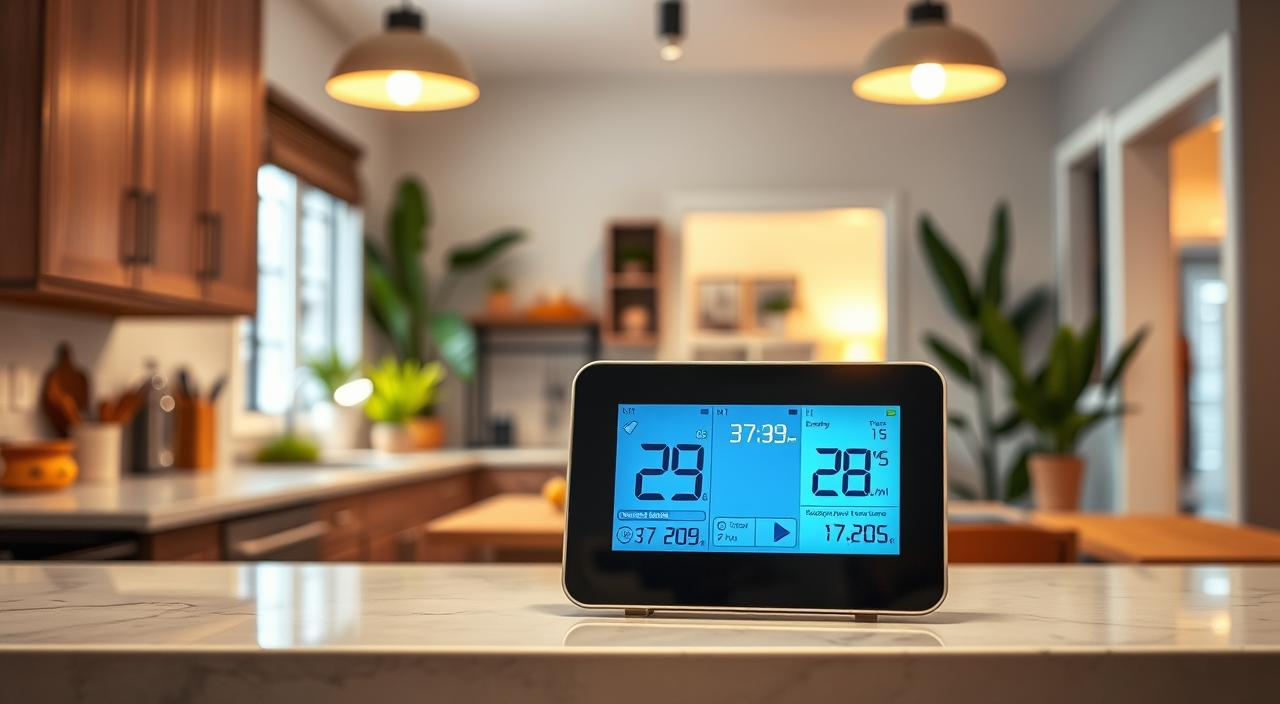
A home power meter is a tool that hooks up to your electricity meter. It shows how much energy your home is using. It’s a simple but powerful device that gives you detailed info on your energy use.
With this info, you can find out which appliances use the most energy. Then, you can change your habits to use less.
Benefits of Monitoring Your Home’s Energy Usage
Keeping an eye on your energy use has many good points. It helps you:
- Understand your energy consumption patterns
- Identify energy-hungry appliances
- Make informed decisions to reduce your energy bills
- Contribute to a more sustainable environment
Using a power meter lets you control your energy use. It’s a home power usage tracker that gives you the info you need. This way, you can make your energy use better.
Types of Home Power Meters Available

It’s important to know the different types of home power meters. This helps you make a good choice. You can pick from many energy monitoring devices to track your energy use well.
Home power meters fall into three main groups: plug-in meters, whole-house monitors, and smart home systems. Each type has special features and benefits. They meet different needs and likes.
Plug-in Power Meters
Plug-in power meters are simple and affordable. They measure how much energy each appliance uses. They are easy to use and show energy use in real time.
- Measure energy usage of specific appliances
- Easy to install and use
- Provide real-time energy consumption data
Whole-House Energy Monitors
Whole-house energy monitors track your home’s total energy use. They give a full view of your energy use. These systems are more complex and often need a pro to install.
- Monitor total home energy consumption
- Provide detailed energy usage patterns
- Can identify areas of energy inefficiency
Smart Home Integration Systems
Smart home systems mix energy monitoring with other smart home features. They let you control and watch your home’s energy use easily.
- Integrate energy monitoring with other smart home devices
- Offer advanced analytics and insights
- Enable remote control and monitoring
When picking a top rated power meter, think about what you need. Also, think about how detailed you want your energy monitoring to be.
Best Power Meter for Home: Key Features to Consider

To find the best power meter for your home, look at several important features. A good power meter helps you track and manage your energy use. When comparing models, focus on a few key aspects.
Accuracy and Reliability
The accuracy of a power meter is key. It affects the trustworthiness of the data it gives. Choose meters that measure energy use accurately, down to the watt or kilowatt-hour. Reliable power meters help you see your energy use and cut down on waste.
Ease of Installation and Use
Installation ease is also important. Some meters are plug-and-play, easy to set up by yourself. Others, like whole-house monitors, might need more work. User-friendly interfaces make it easy to understand and use your power meter.
Data Tracking and Analysis Capabilities
A good power meter tracks and analyzes your energy use well. It lets you see energy use in real-time and track history. Some power consumption trackers even show how much energy each appliance uses.
Smart Home Compatibility
If you have a smart home, check if the power meter works with it. Many modern meters fit well with smart home systems. This lets you manage your energy use through one app.
By looking at these features, you can pick a power meter that fits your needs. Whether you want a simple meter or a full system, there’s a perfect one for you.
Top Plug-in Power Meters
Using a plug-in power meter makes tracking your home’s energy easy. These tools measure how much energy each appliance uses. They help you see how you use energy.
Kill A Watt P4460 Electricity Usage Monitor
Overview
The Kill A Watt P4460 is a well-liked tool for tracking energy use. It shows how much energy your appliances use. This helps you find ways to use less energy.
Pros
- Accurate measurements: Gives exact energy use data.
- User-friendly interface: Simple to use and set up.
- Compact design: Takes up little space.
Cons
- Limited to single-appliance monitoring: Only tracks one device at a time.
- No smart home integration: Doesn’t work with smart home systems.
Features
- Measures energy use in kWh.
- Shows voltage, current, and power factor.
- Compact and easy to carry.
Emporia Smart Plug with Energy Monitoring
Overview
The Emporia Smart Plug does more than just track energy use. It also works with smart home systems. It gives you live energy use data and lets you control devices from afar.
Pros
- Smart home integration: Works with many smart home systems.
- Real-time data: Gives current energy use info.
- Remote control: Lets you control devices from anywhere.
Cons
- Requires a hub: Needs a smart home hub to work.
- Potential connectivity issues: May have connection problems.
Features
- Tracks energy use in real-time.
- Works with popular smart home systems.
- Allows remote control of devices.
Best Whole-House Energy Monitoring Systems
Whole-house energy monitoring systems give you a clear view of your home’s energy use. They help you spot where you can cut down on waste. This way, you can save money on your bills.
Sense Energy Monitor
Overview
The Sense Energy Monitor is a top-notch system for tracking your home’s energy use. It shows you how much energy each device uses. This helps you understand where you can save.
Pros
- Real-time data: See how much energy you’re using right now.
- Device detection: Know which devices are using the most energy.
- Easy installation: It’s simple to set up without needing a pro.
Cons
- Cost: It’s a big investment.
- Requires a stable internet connection: Without internet, it won’t work right.
Features
The Sense Energy Monitor has many useful features, including:
- Real-time energy usage data
- Device detection and monitoring
- Historical data analysis
- Mobile app for remote monitoring
Emporia Vue Gen 2 Smart Home Energy Monitor
Overview
The Emporia Vue Gen 2 is a well-liked energy monitoring system. It gives you detailed insights into your energy use. It also works with other smart home devices.
Pros
- Comprehensive monitoring: Tracks energy use for your whole home.
- Smart home integration: Works with many smart home systems.
- Affordable: It’s cheaper than the Sense Energy Monitor.
Cons
- Installation complexity: May need a pro for homes with complex wiring.
- Limited device detection: It tracks overall energy use but not individual devices as well.
Features
The Emporia Vue Gen 2 has many features, including:
- Real-time and historical energy usage data
- Integration with popular smart home platforms
- Customizable alerts for unusual energy usage patterns
- Mobile app for monitoring on the go
Smart Home Power Meters with Advanced Features

Smart power meters are changing the game for homeowners. They track energy usage and offer insights and automation. This helps you use less energy and save money.
Ecobee SmartThermostat with Voice Control
Overview
The Ecobee SmartThermostat is a top-notch device. It controls temperature, monitors energy, and works with smart homes. You can control it with your voice.
Pros
- Advanced energy monitoring features
- Voice control for hands-free operation
- Integrates with other smart home devices
Cons
- Higher upfront cost compared to basic thermostats
- Requires a stable internet connection for full functionality
Features
The Ecobee SmartThermostat tracks energy, schedules, and lets you access it remotely. It also works with other smart devices for a complete system.
Wemo Insight Smart Plug with Energy Monitoring
Overview
The Wemo Insight Smart Plug tracks energy for each appliance. It’s a plug-in device that lets you control and monitor devices from anywhere.
Pros
- Easy to install and use
- Provides detailed energy usage data for individual appliances
- Remote control capabilities
Cons
- Limited to monitoring a single appliance at a time
- Requires a hub for some smart home integrations
Features
The Wemo Insight Smart Plug tracks energy, schedules, and lets you control devices remotely. It shows how much energy each appliance uses.
Budget-Friendly Power Meters
Watching your home’s energy use doesn’t need to cost a lot. Budget-friendly power meters let you track energy use without spending a lot. They are cheaper than more advanced models.
ThinkBaby TS-836A Electricity Usage Monitor
Overview
The ThinkBaby TS-836A is a simple, plug-in power meter. It’s great for keeping an eye on your appliances’ energy use.
Pros
- Affordability: It’s very cheap.
- Ease of Use: Just plug it in, and it starts tracking energy use.
Cons
- Limited Features: It lacks advanced features like smart home integration.
- Accuracy: Some users say it’s not always accurate.
Features
- Monitors energy use in kWh
- Shows voltage, current, and power factor
- It’s small and easy to carry
Kasa Smart Plug Mini with Energy Monitoring (EP10)
Overview
The Kasa Smart Plug Mini is more than a smart plug. It’s also a good energy monitor. It connects to your smart home system for remote control and tracking energy use.
Pros
- Smart Home Integration: It works well with popular smart home systems.
- Compact Design: Its small size won’t block other outlets.
Cons
- Requires Wi-Fi: It needs a stable internet connection to work fully.
- App Dependency: You need to use the Kasa app for full features.
Features
| Feature | Description |
|---|---|
| Energy Monitoring | Tracks energy use in real-time |
| Remote Control | Turn devices on/off remotely via the Kasa app |
| Smart Home Compatibility | Works with Amazon Alexa and Google Assistant |
As Forbes says, “Smart plugs like the Kasa Smart Plug Mini change how we use devices. They help us save energy and money.” Many homeowners agree, using smart home tech to better manage their energy use.
Installation Guide for Home Power Meters
To start tracking your home’s energy use, you need to install a power meter. This can be a DIY task or a job for a pro. The type of meter you pick will affect how hard it is to install.
DIY Installation Tips for Plug-in Meters
Plug-in meters are easy to set up. Just plug the meter into an outlet and your appliance into the meter. Always follow the maker’s guide for any special steps or settings.
- Choose an outlet that is easily accessible.
- Ensure the meter is compatible with your appliance.
- Follow the manufacturer’s instructions for setup.
Professional Installation for Whole-House Systems
Whole-house systems need a pro to install them. They must connect to your home’s electrical panel. Hire a licensed electrician to do it right and safely.
Setting Up Smart Home Integration
If your meter is part of a smart home, connect it to your network. Follow the maker’s guide to link your meter with your smart home hub or app.
By following these steps, you can set up your home power meter right. This is true whether it’s a simple plug-in or a complex whole-house system.
How to Interpret Power Meter Data
Understanding your power meter data is key to unlocking energy efficiency in your home. With the right insights, you can identify areas of inefficiency. This helps you make informed decisions to reduce your energy consumption.
Understanding Energy Consumption Patterns
Your power meter data shows your energy use patterns. By analyzing this data, you can see when you use the most energy. You can also spot trends in your consumption.
Identifying Energy-Hungry Appliances
One valuable insight from your power meter data is knowing which appliances use the most energy. This info lets you take steps to lower their energy use. It helps reduce your energy bills.
| Appliance | Average Daily Consumption (kWh) | Monthly Cost |
|---|---|---|
| Refrigerator | 4.5 | $6.50 |
| Air Conditioner | 12.0 | $18.00 |
| Washing Machine | 2.5 | $3.75 |
Tracking Progress Over Time
By regularly checking your power meter data, you can see how you’re doing over time. This lets you adjust your energy-saving plans as needed. It helps you meet your energy reduction goals.
Using your best home energy monitor well means checking your energy use often. Make changes to use energy better.
Using Power Meter Data to Reduce Energy Bills
Using an energy monitoring device can really help lower your energy costs. Knowing how much energy you use is key to saving money.
Practical Energy-Saving Strategies
Changing how you use energy is a big step to saving money. Look at your power meter data to find out which appliances use a lot of energy. Then, switch to ones that use less.
Smart plugs are also great. They let you control and check on your appliances.
“The biggest opportunities for energy savings are often found in the smallest changes.” – Energy Efficiency Expert
Setting Energy Reduction Goals
Having clear goals for using less energy can really help. Use your power meter data to set targets. Aim to use less energy by a certain amount in a few months.
Calculating Your Savings
| Month | Energy Consumption (kWh) | Energy Cost ($) |
|---|---|---|
| January | 500 | 50 |
| February | 450 | 45 |
Keep an eye on your energy use and see how it changes over time. This way, you can figure out how much you’re saving. A power meter review can help you pick the best one for tracking your energy.
Conclusion: Investing in the Right Power Meter for Your Home
Getting the right power meter can help you save a lot of money. It lets you see where you’re wasting energy. This way, you can cut down on your bills.
When picking a power meter, think about what’s important. Look for accuracy, easy setup, and good data tracking. The Kill A Watt P4460 and Emporia Vue Gen 2 are great choices.
Choosing the best power meter for your home is a smart move. It helps you use less energy and save money. Whether you need something simple or a full system, there’s a meter for you.
FAQ
Q: What is the best power meter for home use?
A: The best power meter for your home depends on your needs and budget. Top choices include the Kill A Watt P4460 Electricity Usage Monitor and the Emporia Vue Gen 2 Smart Home Energy Monitor.
Q: How do I choose the right power meter for my home?
A: Look at accuracy, ease of installation, and data tracking. Also, consider smart home compatibility and your budget. Think about the appliances you want to monitor.
Q: What are the benefits of using a whole-house energy monitoring system?
A: These systems give a full view of your energy use. They help you find where you can save energy and cut down on bills.
Q: Can I install a power meter myself, or do I need a professional?
A: Plug-in models are easy to set up yourself. But, whole-house systems might need a pro.
Q: How do I interpret the data from my power meter?
A: Understand your energy use patterns. Find out which appliances use a lot of energy. Track your progress to make better choices.
Q: Can a power meter help me reduce my energy bills?
A: Yes, it can. It shows you how much energy you use and where you can save. This helps you cut down on bills.
Q: Are there any budget-friendly power meter options available?
A: Yes, like the ThinkBaby TS-836A Electricity Usage Monitor and the Kasa Smart Plug Mini with Energy Monitoring (EP10).
Q: Can I integrate my power meter with my smart home system?
A: Many power meters work with smart homes. This lets you control and check your energy use from anywhere.
Q: How accurate are power meters?
A: Accuracy varies by model and maker. Look for ones with high accuracy, like +/- 1%.